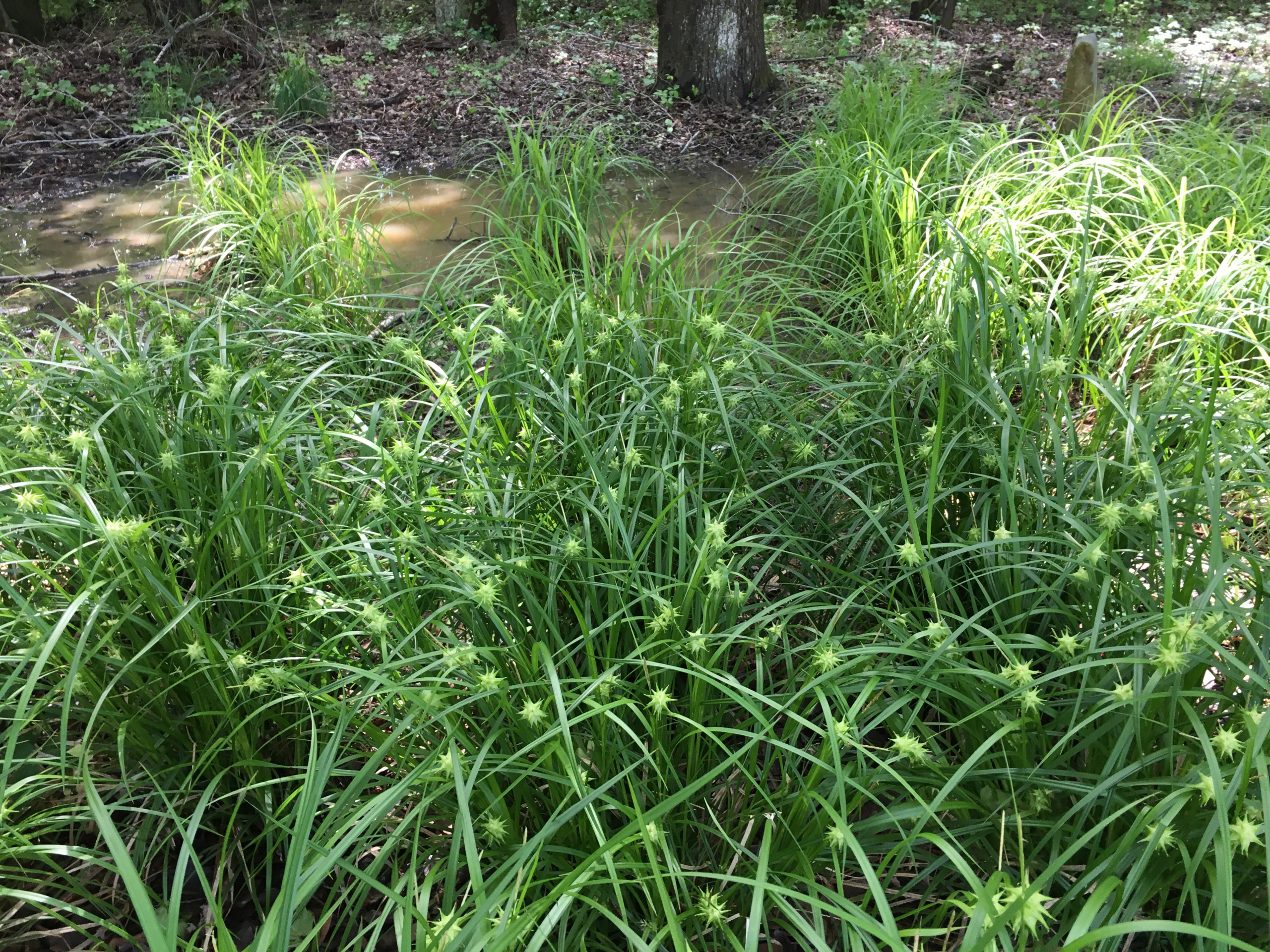
(Image Courtesy of Hoffman Nursery) Gray’s sedge is a cool-season grower that features broad, grassy semi-evergreen leaves that give rise to attractive star-shaped fruiting bodies, showy enough to be noticed from a distance. The seeds are an important food source for various waterfowl, gamebirds, and songbirds. Adaptable to regular garden settings with rich soil, Gray’s sedge is also moisture tolerant and therefore useful along the water’s edge. It is effective in small to large scale plantings.
×
Quantity Calculator
Details
Hardiness Zone:
5
Blossom Color:
Green, of Various Intensity
Growth Habit:
Clump Forming
Max Height:
2½'
Texture:
Medium Texture
Recommended Spacing:
1½' to 2'
We sell this plant in these containers:
#1 Pot
Special Characteristics
Controls Erosion
Deer Resistant
Cuttings
Large Area
Moderate Area
Moisture Tolerant
Native Species
Sandy Soil Tolerant
Features
Broad, grassy semi-evergreen leaves that give rise to attractive star-shaped fruiting bodies.
Landscape Value
Gray's sedge is also moisture tolerant and therefore useful along the water's edge. It is effective in small to large scale plantings.
Care
Watering:
Gray's Sedge requires a fair amount of supplemental watering and often requires watering on a regular basis during the growing season.
Fertilizing:
Gray's Sedge is a moderate feeder, benefiting from a couple of annual applications of slow release fertilizer. A spring application of a 3-1-2 ratio (such as a 15-5-10) can be applied at a rate of about 10 pounds per 1000 square feet, and during early fall, an application of a 2-1-2 ratio (such as a 10-5-10) can be applied to encourage root development and cold hardiness.
Pruning:
Gray's Sedge should be enjoyed all winter long, then, during early April before it begins to grow again, it should be pruned or mowed back to ground level.